
Union County Warrant Checks
Iowa Courts Online offers a free trial-court case search, and that is the first stop for a Union County warrant check. Select Union County. Enter the name, case ID, or citation number tied to your own matter. Exact spelling helps. A name search needs at least two letters of the last name. Date-of-birth mode requires an exact first name and birth date, while a Case ID search also wants the county and case type. The online entry is just an electronic docket index. It is not the official court record. Note the Case ID, charge, warrant event, court, and any bond field. Then call the Union County Clerk of District Court. The clerk can confirm whether a warrant is still active. Agency questions about service go to the sheriff instead. An attorney can explain the risk and the right way to respond.
- Open Iowa Courts Online and choose the trial-court case search.
- Search the correct name, citation, or Case ID with Union County selected.
- Review the docket for a warrant event, court date, charge, and bond details.
- Confirm the current entry with the clerk, then ask the sheriff about service or booking.
- Get legal advice before arranging an appearance, bond, or voluntary surrender.
Union County Warrant Search Handoff
The public search and the clerk serve different roles. The Union County Clerk of District Court keeps the official district-court file and can explain what the docket currently records. Online access is a starting point. The official Iowa Courts Online interface lets anyone locate public Union County cases without registration. It may show a criminal, traffic, scheduled-violation, simple-misdemeanor, or search-warrant case code. Only public information is visible. Timing matters. A new case may take one business day to appear, and some citations take 14 to 21 days. Juvenile and other confidential cases never appear. After a match, record the Case ID and call the clerk at 641-782-7315. A no-result that conflicts with a notice or a recent event deserves a phone call rather than a screen treated as clearance.
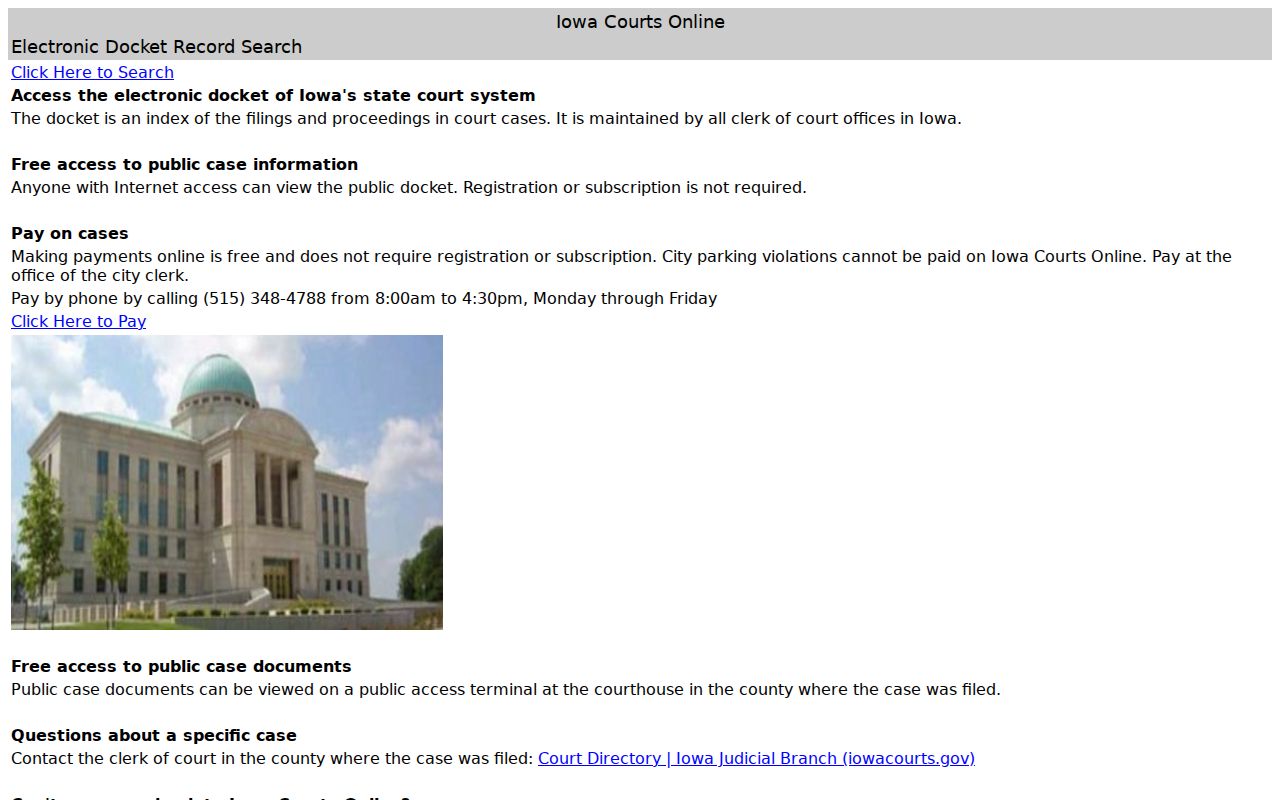
The image shows the official public court-search entry point, not a complete active-warrant roster.
Warrants in Union County: The Main Types
Union County uses Iowa's unified District Court. The key difference is why an order arose and what it commands. Judicial magistrates, district associate judges, and district judges all act within that one system. City traffic and municipal-infraction matters get no separate municipal-court warrant database. The issuing docket and its order control the term.
| Warrant Type | How It Arises | Who Issues It |
|---|---|---|
| Arrest warrant | A complaint, affidavit, indictment, or information supports arrest for an offense. | Iowa District Court judicial officer |
| Bench warrant | A judge compels appearance after a missed date, sentencing, contempt, or failure to obey an order. | Judge in the existing case |
| Search warrant | Sworn facts establish probable cause to search a named person, place, or thing for evidence. | Magistrate or other authorized judicial officer |
| Failure-to-appear warrant | A willful failure to honor a required appearance leads to an arrest warrant under Iowa procedure. | Iowa District Court |
No Union County Warrant Roster
The Union County Sheriff posts no active-warrant, outstanding-warrant, or most-wanted list. That gap changes the method. It does not mean Union County has no warrants. The sheriff publishes contact information, jail information, civil services, and office hours. The public court layer is Iowa Courts Online. The separate IOWA System connects criminal-justice agencies and is not an account-free public search. So use a fallback ladder. Search the public docket, ask the clerk to confirm the case, and call the sheriff about service or custody. If the public case search cannot answer the question, make a focused public-record request. A request should name your own case or a known Case ID. Broad roster requests may pull in restricted material plus staff time or copy charges.
Quick answer: No online result is not proof that no warrant exists. Recent, confidential, juvenile, old, or agency-only information may be missing.
Union County Warrant Records: What They Show
A public docket match shows only the top layer. Read the case caption, county, case type, status, charge, event dates, and assigned court together. The official warrant form goes deeper. It may hold the defendant's identity, the offense and statute, the issuing date, the command to arrest, a judge or clerk signature, and an endorsed bail amount or conditions. Service returns and full documents are another matter. Schedules and bond data may require a courthouse terminal or subscription.
| Case ID | The 17-character court identifier; capital letters matter, and zero differs from O. |
|---|---|
| Subject name | The name tied to the case; confirm identity with the clerk without publishing private identifiers. |
| Charge or offense | The alleged or adjudicated offense and, on a warrant form, its statute. |
| Issuing court | Union County District Court and the judicial officer or clerk shown in the record. |
| Bond or conditions | An endorsed amount or release condition when the warrant is bailable; absence is not a no-bond ruling. |
| Status and events | Docket entries may show issue, service, return, recall, or a later setting. Confirm the newest entry. |
Two Union County Warrant Addresses
Two Pine Street addresses in Creston handle distinct jobs. The Union County Courthouse at 300 N Pine, Suite 6, Creston, houses the Clerk of District Court. That clerk answers records and court-procedure questions at 641-782-7315. Court hours run 8:00 a.m. to 4:30 p.m., Monday through Friday. Enter through the south door. Check in with security. The Union County sheriff, the jail, the Law Enforcement Center, and the Creston Police Department all use 302 N Pine. That side covers law enforcement and custody, not a second warrant court. Call 641-782-7717 for the sheriff. The jail or Law Enforcement Center line is 641-782-8402. The sheriff lists public office hours of 8:00 a.m. to 1:00 p.m. and 2:00 p.m. to 4:00 p.m. weekdays. Call first, since no separate surrender counter or warrant hours are posted.
Union County Warrants: Who Issues, Who Serves
Warrants here start with a judge, not the sheriff. An Iowa District Court judicial officer signs arrest, bench, search, failure-to-appear, and sentencing warrants on the facts and the law of the case. Iowa Code lets any peace officer serve an arrest warrant in any Iowa county. Union County Sheriff's deputies and local police may execute or encounter the order. Only the issuing court can recall or change it. The official Union County Sheriff's Office page gives the public contact route. It posts no warrant list and no warrant-unit phone. Call and ask which agency holds or serves the order. Ask whether a surrender or booking question belongs with the jail. Case status stays a clerk question.
The official sheriff page confirms the public office route for Union County without exposing any private person's record.
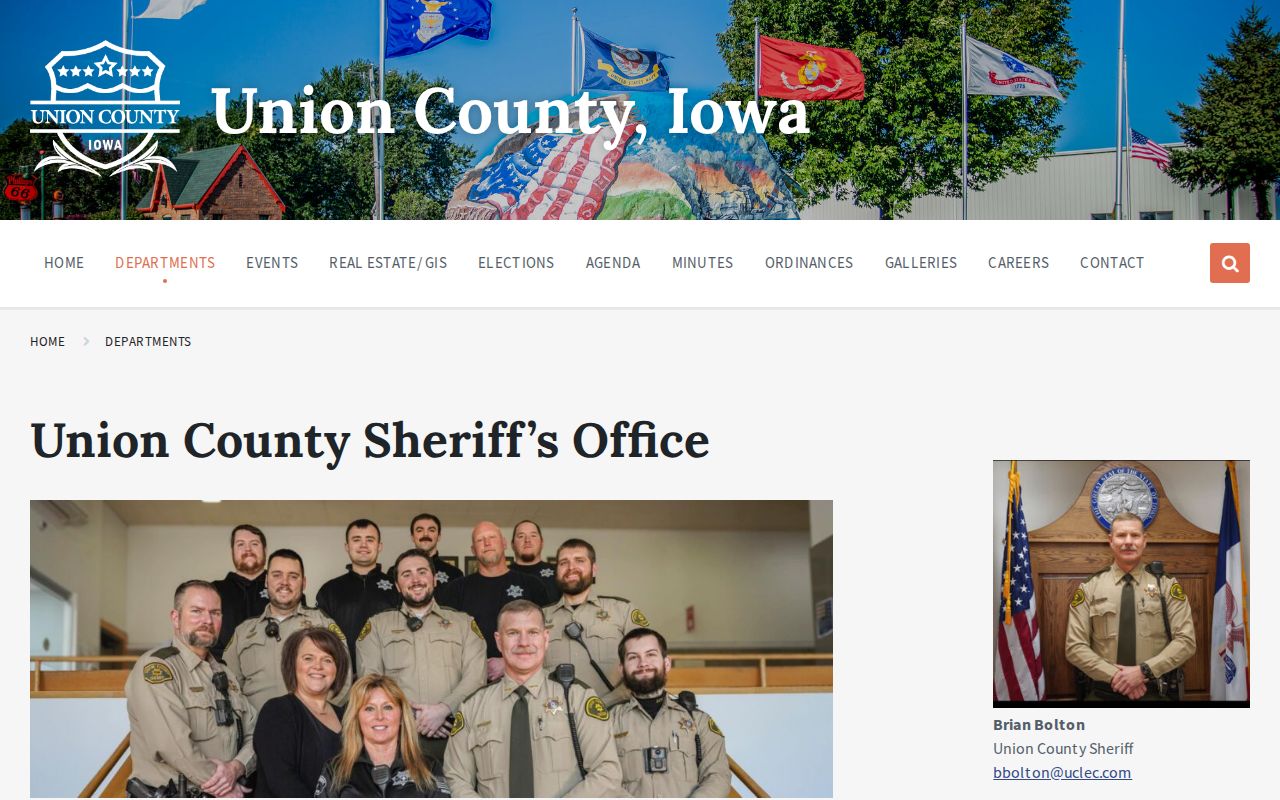
It supports direct contact, not an assumption that an online county roster exists.
Union County Warrant and Debt Paths
Paying a fine does not clear a warrant. Iowa Courts Online takes payments searched by name, Case ID, citation number, or the last four to six citation digits. The clerk also accepts court fines and fees, and the payment line at 515-348-4788 runs during weekday business hours. Keep the receipt. It proves payment, not recall of an arrest order. Unpaid traffic debt can suspend a license too. For that, call the Union County Attorney at 641-782-1730 and ask about the County Attorney Payment Plan, known as CAPP. Iowa DOT says the first payment goes to the clerk. The clerk then asks DOT to withdraw qualifying suspensions. That process fixes debt and driving privilege, not the warrant question. Ask the issuing clerk whether a failure-to-appear warrant remains active and what the court requires next.
Handling a Union County Warrant
Confirm the case and the court first. Ask the clerk about an active warrant. Ask why it issued, whether bond or conditions are endorsed, and whether a new setting or a filed motion is needed. Staff explain procedure. They cannot give legal advice. A defense attorney may contact the court, seek a hearing, move to recall or quash the warrant, or plan a voluntary surrender when that is the sound path. If law enforcement intake is expected, call the Union County sheriff and jail before going to 302 N Pine. Union County publishes no walk-in surrender hours, no bond-window method, no recall form, and no amnesty event. Do not infer those details from another county. After any appearance, payment, bond, or order, keep the receipt and the next court date. Then ask the clerk to confirm the change.
Important: Speak with a lawyer and the issuing clerk before surrender. A confirmed active warrant can lead to arrest anywhere in Iowa.
Union County Warrant Payment Warning
On June 9, 2026, the Iowa Judicial Branch warned that scams were using calls, texts, email, and official-looking mail. The pitches claim unpaid fines, missed jury service, or arrest warrants, and they reach Union County like everywhere else in Iowa. Courts do not demand money that way. They never ask for a Social Security number, prepaid cards, bitcoin, or payment to a private callback number. Officers do not collect court fines and fees either. The official Iowa court warning says authentic payments go through the clerk, secure ePayment, or the published court payment number. Stop before sending money. Call the Union County clerk or sheriff through an independently published number and ask whether the claimed case exists.
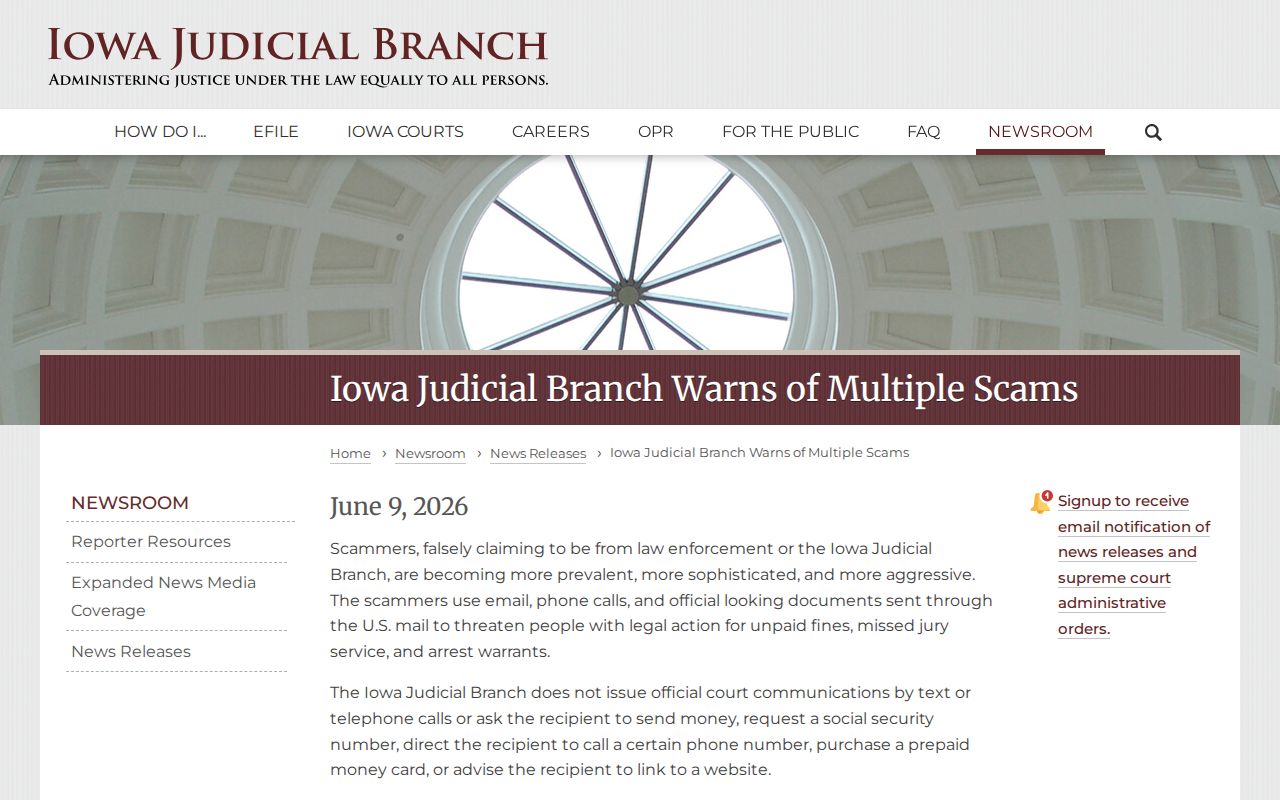
Union County residents get a simple test here. Real court debt is confirmed only through official court channels.
Warrant Record Access Under Iowa Law
Iowa Code chapter 22 opens public records to inspection through the lawful custodian. Court rules and other laws shield some material. District-court requests go to the clerk. Sheriff-held records go to the sheriff's custodian. A complex request may need to be in writing and specific enough to locate the record. Copy, postage, and reasonable staff charges may apply, though Union County lists no warrant-specific fee.
Key Rules:
Iowa Code chapter 22 - Public records may be examined through the lawful custodian, subject to exemptions and reasonable costs.
Iowa Code § 22.7 - Confidentiality can protect investigative reports and criminal-identification material.
Iowa Code § 232.147 - Juvenile court records carry special confidentiality rules.
Union County Warrant System Scale
Union County counted 12,138 residents in the 2020 Census across 423.65 square miles. Creston is the county seat. Creston and Afton have their own police departments. The sheriff covers the smaller incorporated cities too. County historical material notes the sheriff also provides mutual aid. One courthouse and clerk anchor the public court record. The Census incorporated-place table gives the city figures. It also explains why Lorimor, Cromwell, and Arispe offer no standalone city warrant portal, though a local city clerk can route parking or municipal administration questions. Warrant and service questions still belong to the Union County Clerk of District Court and the sheriff.
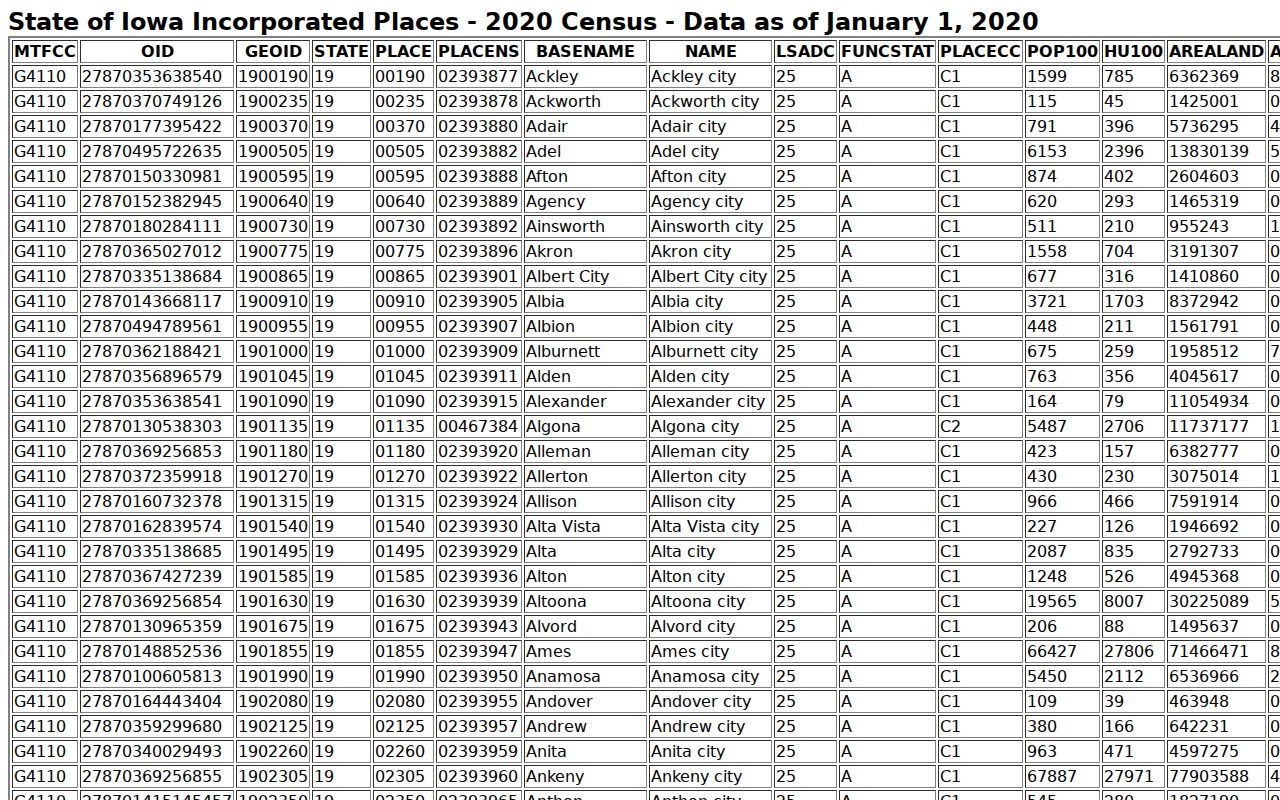
The Census figures size Union County's cities for the top-five order without saying anything about warrant volume.
City Warrant Records in Union County
Iowa's unified court structure reaches every city, and Union County has no separate municipal-court warrant system. County-filed traffic, simple misdemeanor, and municipal-infraction cases go through Iowa District Court and its clerk. Creston and Afton police answer their own citation or service questions. The sheriff is the fallback in the smaller cities. City parking stays with the city clerk. It is excluded from Iowa Courts Online.
Creston Warrants
7,536 · City police operate beside the Law Enforcement Center; court records remain with the county clerk.
Afton Warrants
874 · Afton's one-officer police department receives support from the Union County Sheriff.
Lorimor Warrants
386 · Sheriff coverage and the county docket replace a local warrant portal.
Cromwell Warrants
105 · The city clerk handles administration, not criminal warrant records.
Arispe Warrants
96 · The district-court clerk and sheriff are the warrant-record and service contacts.
Confirming Union County Warrant Changes
A Union County warrant stays active until the issuing court acts on it. That single point trips people up. Posting bond only secures appearance; it does not resolve the charge behind the warrant. Paying what you owe settles a debt, yet it does not prove a failure-to-appear warrant was recalled. A new hearing creates its own duty to appear. So every step in Union County needs its own proof. After you act, ask the clerk which docket entry shows the result. Keep the payment receipt, the bond receipt, any filed motion, the order, and the next court date. Then check the public docket again, though the website can lag behind the clerk's official file. If service or custody questions come up, follow whatever direction the clerk gives about the agency involved. This close-out step keeps an old screen, a payment confirmation, or a caller's claim from being mistaken for the warrant's true status. A relative helping out should follow the same route in Union County. Use only the identifiers needed to find the public case. Never send private details through ordinary email, and never promise a payment will close a warrant. Ask who entered the newest order and when it took effect. If the clerk says a record is restricted, a lawyer can explain what access or appearance options remain.